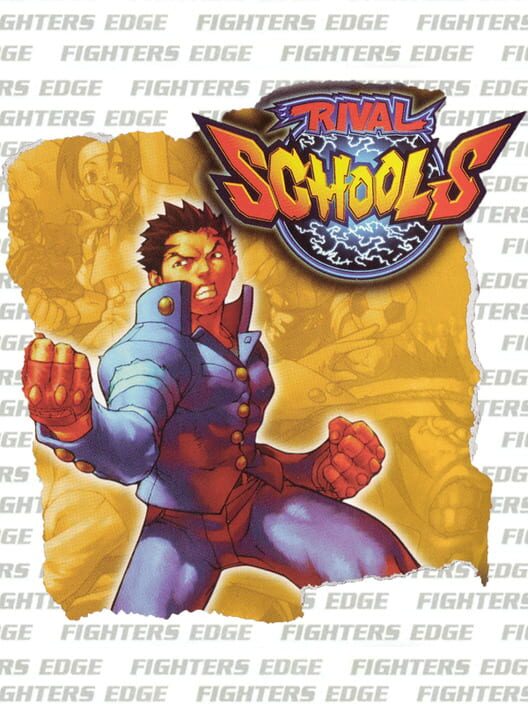
Rival Schools: United by Fate (1997)

Capcom

Arcade, PlayStation, PlayStation 3, PlayStation Portable

My Save State is where you keep a diary of the games you play.

You can't play Rival Schools: United by Fate here, but you can log it, rate it, and see what other players think.

Sign up free Already a member? Sign in
The main fighting game is best described as a polygonal Marvel vs. Capcom game, with some notable differences. Control wise, the game varies from other Capcom fighting games by only having four buttons (two punches and two kicks, which is closer to the SNK game format) rather than the standard six. A player chooses a team of two characters, and … The main fighting game is best described as a polygonal Marvel vs. Capcom game, with some notable differences. Control wise, the game varies from other Capcom fighting games by only having four buttons (two punches and two kicks, which is closer to the SNK game format) rather than the standard six. A player chooses a team of two characters, and fights against another two character team. The actual fights, however, are one-on-one fights, with the partner only participating by being called in when a player has enough 'vigor' for a Team Up attack, done by pressing a punch and kick button of the same pressure. The Team Ups would be some kind of double team attack by the character and partner, or (for most female characters' Team Ups) would heal the main character or give them more vigor. After the end of a round, a player (win or lose) has a choice to fight the next round with the partner from the previous round, or to keep their main character in play. The 'vigor' meter (essentially a super meter) could go up to 9 levels, with Team Ups costing two levels and super moves from a single person all costing one level of vigor. Much like the Marvel vs. Capcom games, launchers can be done that allow air combos to be performed, with all characters having universal low and high launchers.

The game also had a few defensive techniques.

Tardy Counters acted much like Alpha Counters from Street Fighter Alpha, allowing a player to immediately counter-attack from a blocking position. However, the restrictions on Tardy Counters are very lax; any hard normal, special or super attack can be used to Tardy counter (Alpha counters are only limited to certain special moves for each character), and Tardy Counters do not cost any extra vigor to perform (Alpha Counters required at least a level of Super Combo gauge to do).

Attack Cancels allowed a player to cancel an incoming hit simply by timing their own hit with the attack, which would cancel out both attacks (though it does not nullify the remaining hits of a multi-hit move). Also, one additional level of vigor is awarded.
Read more

Details

Developers
Capcom
Publishers
Capcom
Genres
Fighting
Themes
Action, Fantasy
Series
Rival Schools
Also known as
Shiritsu Justice Gakuen: Legion of Heroes (Japanese title, romanization) · Justice Private Academy: Legion of Heroes (Japanese title, translated)

Release dates

  • Nov 17, 1997 (Japan) Arcade
  • Jul 30, 1998 (Japan) PlayStation
  • Oct 26, 1998 (North America) PlayStation
  • Dec 04, 1998 (Europe) PlayStation
  • Feb 23, 2012 (Digital compatibility release) (Japan) PlayStation 3, PlayStation Portable

Related

Expanded games